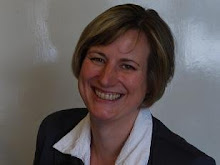
In 2009 after a life changing event the place I went to heal was Africa. I was lucky enough to have contacts in Laikipia Kenya and went to Borana. We have family connections Michael and Nicky who run Borana took me into their home and together with Michael's parents gave me some space and time to accept what had happened without bitterness. Above all it allowed me to begin to accept what happened with those African skies, and the constant ebb and flow of nature, life and death played out in front of one's eyes that makes the unreal, real.
I got involved in politics because of Save the Rhino. A friend had died in Namibia and the fundraiser that I was involved with to make sure that his memory lived on ended with me talking to someone at 3am about politics. A single mum at the time I was encouraged, if I was talking politics at that time of night, to get in touch with the Conservatives and so like a single stone being thrown a pond, the ripples spread outwards. In 2009 I was already on the path that has now seen me elected. It has been a long journey a journey which has been linked with good friends, and rhino conservation. The first time I saw a Rhino in the wild was in 1995, in Tanzania. I can not explain the feeling of seeing two Rhinos meet and rub noses. It was an experience I did not forget and I am not ashamed to admit that I burst into tears.
This summer I was lucky enough to go back to Borana. In 2009 talk of taking down the fences between Lewa and Borana was underway. Now it has happened and a huge conservation area has been opened. Rhinos are solitary on the whole, they have a temper and are unpredictable. They are not cuddly, but more prehistoric, lumbering and bulky they aren't "cute" but magnificent, independent and unpredictable. The barbarism which means they are hunted for their horns is unspeakable. A rhino horn is no different from our fingernails. However the huge sums which they are worth mean that Rhino's need all the help they can get to survive, and the group of conservancies in Laikipia in Kenya are doing just that. Giving the habitat, the protection and the range for Rhinos to survive and perhaps with the help of some us, stopping that knife edge between extinction and survival.
The conservancies in Kenya have suffered from the impact of the terror attacks there, even though they are amongst some of the safest places to be. Not only because of the armed protection for the Rhinos, but because they cover enormous ground, are not easily accessible for marauding groups, but also because of the social responsibility that all the Conservancies are involved in. Most provide primary education for local children, and some help and support secondary schools there too. They support guides, including Peter, Albert Laurence and Martin. They encourage researchers from all over the world to come and study not only Rhino, but the other species that the ecosystem supports.
I realise that my constituents in Cheshire might be wondering what this has to do with them. Chester Zoo has for years had expertise in Rhinos and has worked closely with Save the Rhino to stop the extinction of this and other species. I will be supporting Borana through Save the Rhino. I want to do so not only because I see the other species that supporting Rhino also help conserves, but because I identify with that slightly bad tempered, lumbering, shortsighted unpredictable Rhino. I can't think why....but would encourage you to support them too.
Saturday, August 29, 2015
Sunday, May 31, 2015
Settling in
The blisters I got in the first week have just about healed now. I walked 9km on Monday which gives you some idea as to why we have 8 minutes to get to the voting lobby when the division bell rings, we have not had to vote yet but I am getting prepared. I am trying to learn some of the shortcuts and now have an office which is real progress.
Planning is holding up the constituency office search, but I have no doubt we will get there eventually. Casework and visits in the Constituency are progressing with a visit on Friday to NWF a large diversified business employing over 600 people. On Monday I will be with Graham Evans MP who has raised significant funds for St Luke's Hospice in his London Marathon run, and we will both be at the opening of the new warehouse for St Luke's, and Graham will be driving the St Luke's bus which is a big red London Bus which tours around the Constituency selling beautiful vintage clothing in aid of the Hospice.
I will need to do a timed run this week from my Westminster office to the voting lobby so I know exactly how long it takes - that won't factor in 650 other MPs all rushing to get to the same place so I expect it will be an interesting experience!
Meanwhile I have been drawn for my first question on health, I have also put my name forward for the 1922 Committee which will require an election on Wednesday, it will be interesting to see the outcome of that election. Three new MPs have put their names forward and this is in proportion to the numbers that we are on the back benches. I was one of a number of AMs in Cardiff to argue that Committee chairs should be elected, as they are in Westminster. Lord Elis Thomas supported those of us pushing for the change but the Party Leaders in Cardiff preferred the system of Patronage that currently exists. By contrast letters from Committee Chair hopefuls have been arriving by the dozen in Westminster and I will be sitting down to sort through them on Monday.
On Tuesday I will be taking part in the Macmillan Tug of War which raises funds for a great cause.
Its going to be a good week....roll on Monday.
Planning is holding up the constituency office search, but I have no doubt we will get there eventually. Casework and visits in the Constituency are progressing with a visit on Friday to NWF a large diversified business employing over 600 people. On Monday I will be with Graham Evans MP who has raised significant funds for St Luke's Hospice in his London Marathon run, and we will both be at the opening of the new warehouse for St Luke's, and Graham will be driving the St Luke's bus which is a big red London Bus which tours around the Constituency selling beautiful vintage clothing in aid of the Hospice.
I will need to do a timed run this week from my Westminster office to the voting lobby so I know exactly how long it takes - that won't factor in 650 other MPs all rushing to get to the same place so I expect it will be an interesting experience!
Meanwhile I have been drawn for my first question on health, I have also put my name forward for the 1922 Committee which will require an election on Wednesday, it will be interesting to see the outcome of that election. Three new MPs have put their names forward and this is in proportion to the numbers that we are on the back benches. I was one of a number of AMs in Cardiff to argue that Committee chairs should be elected, as they are in Westminster. Lord Elis Thomas supported those of us pushing for the change but the Party Leaders in Cardiff preferred the system of Patronage that currently exists. By contrast letters from Committee Chair hopefuls have been arriving by the dozen in Westminster and I will be sitting down to sort through them on Monday.
On Tuesday I will be taking part in the Macmillan Tug of War which raises funds for a great cause.
Its going to be a good week....roll on Monday.


Saturday, May 23, 2015
Nerves
Normally I am a reasonably accomplished speaker - as my blog information shows. However since my election on the 8th May I have found myself a bag of nerves. With my background as a Barrister and then as an Assembly Member I find myself questioning why I have been reduced to knee shaking rubble! Nothing brought this home to me more than my recent appearance at the Bishop Heber school on Friday in front of year group 11 - who were lovely, but for some inexplicable reason I suddenly got an attack of the nerves.
I can only think that having been elected as the MP for Eddisbury, I am suddenly feeling a bit like the new girl at a very big and rather imposing "school", except that it is no school it is the "Mother of all Parliaments". The moment of walking through the doors last Monday rather unexpectedly has caused a minor crisis of confidence. Why that should be is perhaps a reflection of the enormity of the trust that the electorate have placed in me.
I know that I have the skills to do my constituents proud, I know that I have worked for this for 10 years and even though I am constantly getting lost down corridors that I will work hard, am proficient and could shine. I am a people person and perhaps the institution is what is playing on my mind. Over 20 years ago I was the most junior of junior lawyers in the opening of the legal year, walking into the old Westminster Parliament was something that was so incredibly special and humbling that I felt it then, it feels very much like that now.
Given time I am sure that the awe that I feel will abate a little and that I will get over seeing people who I normally only see on Question Time who are now my colleagues and fellow MPs. For the time being though I want to enjoy my nerves as it shows that I care, and that I am taking my role seriously. The best thing about the last two weeks has been the staff at the House of Commons who have absolutely gone out of their way to make me and other MPs feel welcome, help settle us in, stopped us getting endlessly lost and allowed us to ask the stupid questions, and the not so stupid ones. The door keepers and library staff are a delight - a special mention to Kelvin and Alison. So roll on those nerves, but don't last too long!
I can only think that having been elected as the MP for Eddisbury, I am suddenly feeling a bit like the new girl at a very big and rather imposing "school", except that it is no school it is the "Mother of all Parliaments". The moment of walking through the doors last Monday rather unexpectedly has caused a minor crisis of confidence. Why that should be is perhaps a reflection of the enormity of the trust that the electorate have placed in me.
I know that I have the skills to do my constituents proud, I know that I have worked for this for 10 years and even though I am constantly getting lost down corridors that I will work hard, am proficient and could shine. I am a people person and perhaps the institution is what is playing on my mind. Over 20 years ago I was the most junior of junior lawyers in the opening of the legal year, walking into the old Westminster Parliament was something that was so incredibly special and humbling that I felt it then, it feels very much like that now.
Given time I am sure that the awe that I feel will abate a little and that I will get over seeing people who I normally only see on Question Time who are now my colleagues and fellow MPs. For the time being though I want to enjoy my nerves as it shows that I care, and that I am taking my role seriously. The best thing about the last two weeks has been the staff at the House of Commons who have absolutely gone out of their way to make me and other MPs feel welcome, help settle us in, stopped us getting endlessly lost and allowed us to ask the stupid questions, and the not so stupid ones. The door keepers and library staff are a delight - a special mention to Kelvin and Alison. So roll on those nerves, but don't last too long!
Thursday, March 19, 2015
Eddisbury shortlist
Today I received the great honour from Eddisbury Conservative Association to be shortlisted to fight the parliamentary seat of Eddisbury at the forthcoming General Election.
I will be fully focussed on gaining the support of the members of Eddisbury Conservatives over the forthcoming days and if fortunate enough to be selected will be a full time candidate in the constituency until May 7th.
If selected I have decided to donate the salary that I receive as an Assembly Member for North Wales for the parliamentary campaign period to charity, one of the recipients will the Moneypenny Foundation based in Wrexham. Moneypenny is a great local business that has helped a number of people back into work and the Foundation has had considerable success in the last year. The remainder will go to Clare House who look after children from both sides of the border, but does not receive funding from the Welsh Assembly. My constituency and Assembly office will continue to operate as normal, serving my North Wales constituents, until the outcome of the election is known. I will resign my Welsh Assembly seat if elected, and I will also move into the Constituency, my family understand these decisions and support them.
Strong economic and social links exist between North Wales and Cheshire. Although there is a border dividing the two regions, many residents live, farm and work on both sides of the border. A strong Cheshire can only benefit North Wales and vice versa. Eddisbury, Chester and Wrexham/Deeside have always been good neighbours and if selected to contest the Eddisbury seat next week I will be fully focussed on developing and strengthening these links as the prospective Member of Parliament.
I have gained a strong reputation for delivery for my constituents in North Wales and I pledge to be a similar strong voice for all the people of the Eddisbury constituency
Sunday, March 01, 2015
Smacking Ban amendments in the Assembly this week
Today on BBC Wales Sunday Supplement I was interviewed about the "smacking ban" amendment to the proposed Domestic Violence Bill in the Assembly. You can hear the argument for and against here (you may need to cut and paste the link)
http://www.bbc.co.uk/programmes/b0536jqc#auto
scroll through to 30 minutes. The arguments of campaigners for a ban say that a child should be given the same rights as an adult - no matter what age that child is. To my mind this is simply wrong. Any parent of a toddler will know that feeling of fright when one minute they are next to you and the next minute they are gone - running out into the road - or in my case that total silence of my 3 year old, when I went to see what she was up to, she had my bunch of keys and was about to put them into an electric socket which was halfway up the wall - having climbed onto the sofa to do so.
It is absolutely clear that if you give your child anything more than a short sharp tap it is already illegal, if there is a bruise or anything other than a temporary red mark, you risk being investigated and charged by the police. The CPS charging standards say that where there is bruising a parent should be prosecuted. What is being argued for in the Assembly is what is known as a strict liability offence, which means no matter what the circumstances, if you smack your child you are a criminal and you could have a criminal record. I don't think this is right as it will criminalise many loving parents, who care deeply about their children. The current law provides a defence of "reasonable" punishment - this means that a jury or magistrate can look behind the smack, and see why the parent did it. If their child ran out into the road, or was about to give themselves a huge electric shock, they can decide that the parent acted reasonably. The current amendment would mean that would no longer be possible. I think that is totally wrong and will not be supporting it. I would rather trust 12 citizens to judge me, so they can apply the standards of reasonableness that apply at the time than a blanket criminal offence that makes every parent a criminal as soon as they smack a child and relies upon a police officer not charging.
I in no way condone violence against children, and a beating is clearly illegal now. However the argument that education doesn't work is wrong. We don't have education on healthy relationships, or very little of it. Welsh Government have resisted the idea of every school having to teach about respect and health relationships - but locking up mothers or fathers for a short sharp tap is absolutely not the answer. Through education change will happen, that is the route that we should promote as children do not have the same rights as adults, as anyone who has been the parent of a toddler will know, and the parents that are most likely to be criminalised will be those less able to talk themselves out of prosecution. It would quite simply be wrong to turn many loving and caring parents into criminals.
http://www.bbc.co.uk/programmes/b0536jqc#auto
scroll through to 30 minutes. The arguments of campaigners for a ban say that a child should be given the same rights as an adult - no matter what age that child is. To my mind this is simply wrong. Any parent of a toddler will know that feeling of fright when one minute they are next to you and the next minute they are gone - running out into the road - or in my case that total silence of my 3 year old, when I went to see what she was up to, she had my bunch of keys and was about to put them into an electric socket which was halfway up the wall - having climbed onto the sofa to do so.
It is absolutely clear that if you give your child anything more than a short sharp tap it is already illegal, if there is a bruise or anything other than a temporary red mark, you risk being investigated and charged by the police. The CPS charging standards say that where there is bruising a parent should be prosecuted. What is being argued for in the Assembly is what is known as a strict liability offence, which means no matter what the circumstances, if you smack your child you are a criminal and you could have a criminal record. I don't think this is right as it will criminalise many loving parents, who care deeply about their children. The current law provides a defence of "reasonable" punishment - this means that a jury or magistrate can look behind the smack, and see why the parent did it. If their child ran out into the road, or was about to give themselves a huge electric shock, they can decide that the parent acted reasonably. The current amendment would mean that would no longer be possible. I think that is totally wrong and will not be supporting it. I would rather trust 12 citizens to judge me, so they can apply the standards of reasonableness that apply at the time than a blanket criminal offence that makes every parent a criminal as soon as they smack a child and relies upon a police officer not charging.
I in no way condone violence against children, and a beating is clearly illegal now. However the argument that education doesn't work is wrong. We don't have education on healthy relationships, or very little of it. Welsh Government have resisted the idea of every school having to teach about respect and health relationships - but locking up mothers or fathers for a short sharp tap is absolutely not the answer. Through education change will happen, that is the route that we should promote as children do not have the same rights as adults, as anyone who has been the parent of a toddler will know, and the parents that are most likely to be criminalised will be those less able to talk themselves out of prosecution. It would quite simply be wrong to turn many loving and caring parents into criminals.
Wednesday, February 18, 2015
When is a review not a review? When its a rubber stamping exercise
Recent press reports have indicated that Welsh Health Minister has called for an "independent" review. How "independent" in reality is this review. Lets look at the facts. I understand the Health Minister had a full briefing from the Health Board prior to the issue going to the full board and independent members. Clearly if this is the case then the Minister did nothing to stop the downgrading proposals going ahead. Which is surprising because there had been a complete lack of consultation with staff, patients and the Community Health Council who are there to protect our, the patients, interests. The Minister must have known none of this had happened.
So - knowing what he did, and in the face of huge public opposition he has now appointed two Welsh Government appointees to look at the processes and decision making by the Board. Lets be clear - the decision that is being looked as is NOT the closure - but whether or not the plans to return services to the hospital are clear. If the services leave - the review can happen and everything will be kicked into the long grass until 2017 (co-incidentally after the general election and after the Assembly elections) and Labour think they are safe again to say "temporarily" moved services will be permanently moved. That is what has happened at all the other places where Professor Purt has been. Withybush is a classic example of temporary services disappearing permanently.
Nothing in the Minister's letter acknowledges the knock on effects of removing the maternity service. If the maternity services go from Glan Clwyd - so will the Special Care Baby Unit. Where is that going to go? If it goes to the Maelor babies from Ysbty Gwynedd are going to have to travel over 66 miles to access special care, meaning a greater risk to mothers and their babies. A&E risks being downgraded without obstetrics as there will be no emergency care/expertise available on the site. Most midwife led maternity units in England are within 10 miles of a consultant led service - that will not happen here where it is 33 miles. Therefore the English statistics on safety are irrelevant, as the circumstances are totally different.
Finally the Ministers letter says nothing about the 1 in 11 rota which apparently has created so called "clinical risks". Everywhere else in the UK is a 1 in 8 rota, so why now has the Deanery imposed a 1 in 11 rota in Wales. The board were given the option of continuing with a 1 in 8 rota - provided the board would guarantee the training element for Doctors - they refused. It is that refusal that has led the management to be able to argue that services are "unsustainable" and a clinical risk. The letter from the Minister published in the Daily Post today says nothing about this - why not. It is not looking at whether or not services should be moved. A truly independent inquiry would be looking into why BCUHB refused to provide the training guarantee, and would be looking into what attempts were made by the board to organise rotas across all three sites. Which so far are none or almost none.
Without looking at those issues, then the review is not a review, but a rubber stamping exercise by Welsh Government. The deadline for submission of the business case for the Sub Regional Neonatal Unit is the end of March - the Minister knows that - where is the business case. Surely BCUHB should be championing publicly the creation of this new unit which will help with the recruitment issues - but no deafening silence. If the March deadline is missed - that will tell you all you need to know about the Health Board's intentions. The words "kick into the long grass" come to mind.
The Deanery rotation decision is apparently being looked at by the Welsh Government Health Minister - but his letter says nothing about the Review looking into workplace rotation, and rota issues - why not? I questioned him on this last week, and he said that he would get his civil servants to "look into the matter". What has happened since is a deafening silence. I and the other AMs are waiting for his response, but deafening silence is not enough, and I would have expected the Minister to have an immediate answer as to why this is being imposed here in Wales, when a 1 in 8 rota could provide safe and sustainable services in the long term.
I urge you all to attend the protest meeting at the Events Arena in Rhyl on Saturday 21st February 2pm. I along with many other Welsh AMs will be there, because this review is not a review.
So - knowing what he did, and in the face of huge public opposition he has now appointed two Welsh Government appointees to look at the processes and decision making by the Board. Lets be clear - the decision that is being looked as is NOT the closure - but whether or not the plans to return services to the hospital are clear. If the services leave - the review can happen and everything will be kicked into the long grass until 2017 (co-incidentally after the general election and after the Assembly elections) and Labour think they are safe again to say "temporarily" moved services will be permanently moved. That is what has happened at all the other places where Professor Purt has been. Withybush is a classic example of temporary services disappearing permanently.
Nothing in the Minister's letter acknowledges the knock on effects of removing the maternity service. If the maternity services go from Glan Clwyd - so will the Special Care Baby Unit. Where is that going to go? If it goes to the Maelor babies from Ysbty Gwynedd are going to have to travel over 66 miles to access special care, meaning a greater risk to mothers and their babies. A&E risks being downgraded without obstetrics as there will be no emergency care/expertise available on the site. Most midwife led maternity units in England are within 10 miles of a consultant led service - that will not happen here where it is 33 miles. Therefore the English statistics on safety are irrelevant, as the circumstances are totally different.
Finally the Ministers letter says nothing about the 1 in 11 rota which apparently has created so called "clinical risks". Everywhere else in the UK is a 1 in 8 rota, so why now has the Deanery imposed a 1 in 11 rota in Wales. The board were given the option of continuing with a 1 in 8 rota - provided the board would guarantee the training element for Doctors - they refused. It is that refusal that has led the management to be able to argue that services are "unsustainable" and a clinical risk. The letter from the Minister published in the Daily Post today says nothing about this - why not. It is not looking at whether or not services should be moved. A truly independent inquiry would be looking into why BCUHB refused to provide the training guarantee, and would be looking into what attempts were made by the board to organise rotas across all three sites. Which so far are none or almost none.
Without looking at those issues, then the review is not a review, but a rubber stamping exercise by Welsh Government. The deadline for submission of the business case for the Sub Regional Neonatal Unit is the end of March - the Minister knows that - where is the business case. Surely BCUHB should be championing publicly the creation of this new unit which will help with the recruitment issues - but no deafening silence. If the March deadline is missed - that will tell you all you need to know about the Health Board's intentions. The words "kick into the long grass" come to mind.
The Deanery rotation decision is apparently being looked at by the Welsh Government Health Minister - but his letter says nothing about the Review looking into workplace rotation, and rota issues - why not? I questioned him on this last week, and he said that he would get his civil servants to "look into the matter". What has happened since is a deafening silence. I and the other AMs are waiting for his response, but deafening silence is not enough, and I would have expected the Minister to have an immediate answer as to why this is being imposed here in Wales, when a 1 in 8 rota could provide safe and sustainable services in the long term.
I urge you all to attend the protest meeting at the Events Arena in Rhyl on Saturday 21st February 2pm. I along with many other Welsh AMs will be there, because this review is not a review.
Friday, February 13, 2015
Gagging orders and bullying at Glan Clwyd
In a deeply cynical move it appears that BCUHB have drawn attention to a Royal College of Obstetricians and Gynaecologists report prepared back in 2013 and reporting in 2014. The report looks back at behaviour in the unit taken place as long ago as 2004.
The fact that this has been highlighted now, is no coincidence. Staff have been told that they can not comment publicly, so are not in a position to rebut claims by the health board. The real question to be asked is why the recommendations in the report were not acted on quickly and seen through. There are serious questions about the "update" report which was with the board papers. It was dated December 2014 and yet it shows that several of the recommendations were not acted upon, and gives no dates as to when procedures were put in place following the RCOG report.
The reason this has been highlighted now, is to try and cause doubt in the minds of the public - well I believe that those protesting against the closure will see through this attempt at smear tactics. If issues were not dealt with - that was the fault of management rather than staff.
Recruitment issues were exacerbated for example by a Matron in the maternity unit being moved against her wishes, and against the wishes of the department. By all accounts she had them all ticking like a well oiled clock with moral improving, and the team working well together. What did the Health Board do? Angela Hopkins and other senior staff ignored pleas not to move her. Forcibly moved to Ysbty Gwynedd, despite having a seriously ill family member, against her will, she resigned and left the BCUHB to work in a new area. The BCUHB then complain that they have recruitment and staff moral issues - is it any wonder why?
I hope the public will not fall for this attempt by senior management to smear their staff. I for one am not taken in.
The fact that this has been highlighted now, is no coincidence. Staff have been told that they can not comment publicly, so are not in a position to rebut claims by the health board. The real question to be asked is why the recommendations in the report were not acted on quickly and seen through. There are serious questions about the "update" report which was with the board papers. It was dated December 2014 and yet it shows that several of the recommendations were not acted upon, and gives no dates as to when procedures were put in place following the RCOG report.
The reason this has been highlighted now, is to try and cause doubt in the minds of the public - well I believe that those protesting against the closure will see through this attempt at smear tactics. If issues were not dealt with - that was the fault of management rather than staff.
Recruitment issues were exacerbated for example by a Matron in the maternity unit being moved against her wishes, and against the wishes of the department. By all accounts she had them all ticking like a well oiled clock with moral improving, and the team working well together. What did the Health Board do? Angela Hopkins and other senior staff ignored pleas not to move her. Forcibly moved to Ysbty Gwynedd, despite having a seriously ill family member, against her will, she resigned and left the BCUHB to work in a new area. The BCUHB then complain that they have recruitment and staff moral issues - is it any wonder why?
I hope the public will not fall for this attempt by senior management to smear their staff. I for one am not taken in.
Subscribe to:
Posts (Atom)